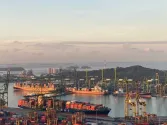
China's healthcare sector set for global breakout
Greater China completed 186 cross-border biotech out-licensing deals in 2025.
China's healthcare industry may become the country's next major global export story, following the pattern set by electric vehicles (EV), according to a World Economic Forum analysis.
Greater China — mainland China, Hong Kong, Macau, and Taiwan — completed 186 cross-border biotech out-licensing deals in 2025, worth a combined $137.7b, based on PharmCube data reported by Reuters.
Moreover, demographics are driving urgency. By the end of 2025, China had 323.38 million people aged 60 and older, or 23% of its total population, according to the National Bureau of Statistics.
The government is targeting an increase in average life expectancy to around 80 years between 2026 and 2030, up from 79 at the end of 2024, per the National Health Commission.
Further, China's 15th Five-Year Plan (2026–2030) is expected to direct stronger support toward biotechnology, medical devices, digital health, and advanced manufacturing.
The report frames China's path to global relevance in healthcare as harder than its EV expansion, since cost and manufacturing scale alone will not clear the bar.
Medicines, diagnostics, devices, and artificial intelligence (AI)-driven care models require clinical evidence, regulatory trust, ethical data handling, and patient acceptance abroad.
The report noted that three tests will determine success, per the analysis, including clinical evidence — converting China's large health datasets into rigorous data accepted by foreign regulators.
Additionally, data governance is a necessity as cross-border data flows, patient consent, cybersecurity, and genetic data protection will shape whether AI-enabled tools can be adopted internationally.
It also includes real-world adoption for innovations that need to function within existing clinical workflows and reimbursement systems, not just controlled trials.
A structural shift is also underway in how Chinese biotech firms operate. Rather than developing domestically and exporting later, a newer generation of companies is designing itself as globally native from the outset — raising capital, running trials, and building investor bases across multiple markets.













 Read Here
 Advertise
 Sign Up