NUH targets 20% productivity swing via ‘Mission Command’
By flattening its hierarchy, ground teams now have the autonomy to make faster decisions.
Singapore’s National University Hospital (NUH) is pursuing a radical 20% swing in practicing through an operational philosophy termed "Mission Command."
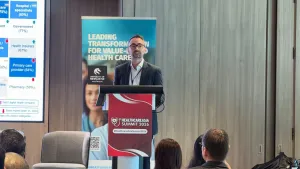
By granting ground teams autonomy and flattening the organisational hierarchy from six layers to four, the hospital has moved away from traditional top-down micromanagement, Professor Aymeric Lim, CEO of NUH, said during the Healthcare Asia Summit held in Singapore on 25 March.
"No micromanagement—teams on the ground have autonomy within certain parameters," Lim said. This structural shift ensures "fewer layers of approval" and faster decision-making as the institution prepares for its 2030 targets.
The core of this strategy is the democratisation of artificial intelligence across the 9,000-strong workforce. NUH has already trained 41% of its staff, including the most junior ancillary employees.
"We should train everybody," Lim said, adding that "training our ancillary staff was very useful. They used to be scared of the doctors... but now they use Copilot... and they’re confident." This empowerment extends to operations leaders who are now "creating their own chatbots or their own agentic AIs to help them in their work."
The results of this "Mission Command" approach are surfacing in clinical workflows. By freeing nursing time to focus on what matters, the hospital has reduced nursing handovers from one hour to just 10 minutes.
"Part of this is freeing nursing time... voice to text, but the most important was decreasing documentation and also augmenting the nursing role," Lim said.
In the medical domain, inpatient tests have been reduced by 15% over the past two years. Furthermore, the use of AI-planned robotic surgery has resulted in a 50% reduction in surgery time for knee replacements.
These efforts are a direct response to what Lim describes as "Singapore’s perfect storm," where one in four citizens will be older than 65 by 2030 and healthcare spending is going very high. Facing these pressures, the hospital is targeting a 10% increase in productivity for 10% decrease in inefficiency.
"The thing that's only—the AI is the only scalable lever... It’s not incremental, it’s exponential. Every month there’s something new coming out, and it’s just a crazy ride,” Lim said.
Whilst the expansion of capabilities is rapid, Lim is clear that governance safety is key.
"We don’t want to stop people from using AI. We just want it to be controlled. We don’t want us to be a block for people and develop things which are good for patients," Lim said.
Ultimately, Lim believes healthcare must close the gap with other sectors. "Looking at healthcare, I think we’re far behind many other industries—finance, transport, retail, manufacturing... we need to close the gap," Lim said.
By 2030, NUH intends to be an organisation where technology is a democratised tool used by everyone. "It’s finding that balance and coming up with things which are useful," Lim said.










 Read Here
 Advertise
 Sign Up