HKU develop RNA 'cut-and-patch' tool for treating neurodegenerative diseases
It enables precise removal and replacement of faulty RNA segments without changing DNA.
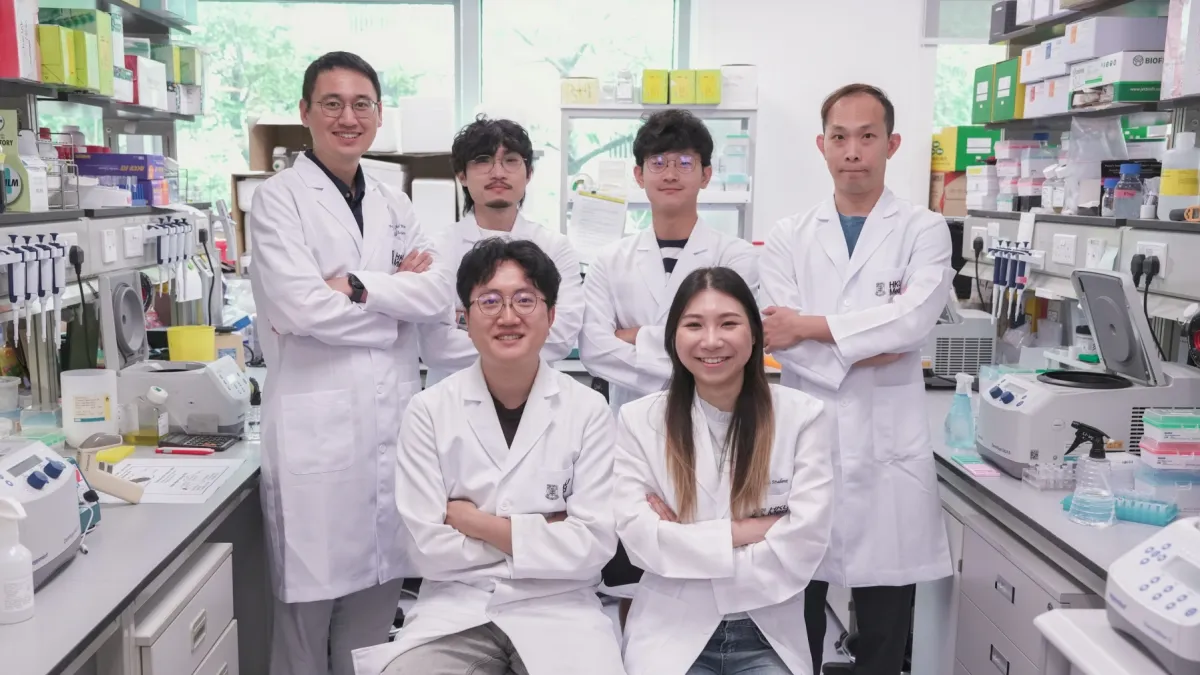
Researchers from the School of Biomedical Sciences at the LKS Faculty of Medicine of the University of Hong Kong have developed a new biotechnology tool called RNA Segment Editing (RSE) that could lead to new treatments for neurodegenerative diseases such as Huntington’s disease.
Unlike conventional gene-editing approaches that permanently alter DNA, this method works directly on RNA, allowing faulty genetic messages to be removed or replaced without making irreversible changes to the genome.
RNA acts as the messenger carrying instructions from DNA to produce proteins. According to Assistant Professor Kwon Sung Chul of HKU’s School of Biomedical Sciences, errors in RNA can contribute to a range of diseases, including Huntington’s disease and certain cancers.
"Current editing tools often either destroy the entire RNA message or fix only a single character, which greatly limits their therapeutic potential," he said. "Correcting these RNA errors has been a longstanding challenge."
To address this limitation, the researchers engineered a modified version of the enzyme Cas13, an RNA-targeting molecular “scissor,” enabling it to cut RNA at highly specific locations with improved accuracy
Building on this engineered system, the team created the RSE platform, which operates like a biological “find and replace” function. It removes faulty segments of RNA and inserts corrected sequences while leaving the rest of the message intact.
This selective approach is particularly important for conditions like Huntington’s disease, where toxic repetitive RNA segments damage brain cells. Existing experimental treatments often remove entire RNA molecules, which can eliminate both harmful and beneficial information.
RSE, however, allows for targeted removal of only the disease-causing sections whilst preserving normal protein function.
The team engineered the RNA-targeting enzyme Cas13 to improve accuracy, allowing it to cut RNA at specific sites.
The resulting platform functions like a “find-and-replace” system for genetic messages, removing harmful RNA segments while keeping healthy parts intact.
Researchers said this approach could be especially useful for diseases like Huntington’s disease, where toxic RNA repeats damage brain cells. Current methods often remove entire RNA strands, which can disrupt normal cell function.
"RSE provides a flexible and safe approach that could be tailored to treat neurodegenerative diseases," Kwon said. "This opens exciting new possibilities for RNA-based therapies that can be adjusted or reversed simply by stopping the treatment, much like a conventional pill.’














 Read Here
 Advertise
 Sign Up