China Medical University Hospital, Taiwan wins 3 accolades at Healthcare Asia Awards 2026
The hospital was recognised for its AIoT-powered critical care innovations and driving sustainable partnerships.
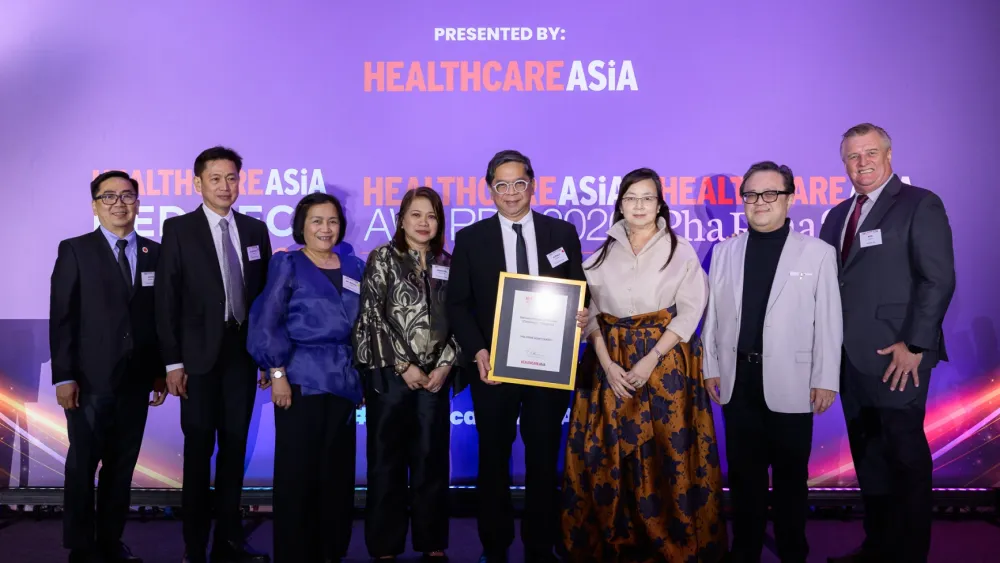
China Medical University Hospital, Taiwan (CMUH) won the Marketing Initiative of the Year - Taiwan, Smart Hospital Initiative of the Year - Taiwan, and Technology Innovation of the Year - Taiwan at the Healthcare Asia Awards 2026.
It received recognition for revolutionising critical care with AIoT technology, as well as its five-step Framework for Building a Non-Capital Hospital into an Asia-Pacific International Healthcare Hub, which presented a structured marketing model designed to convert operational performance into sustained cross-border institutional partnerships.
AIoT technology in critical care
The complex, high-pressure environments of intensive care units (ICUs) can contribute to fatigue, burnout, and avoidable variation in care. To address these challenges, CMUH developed HiThings Tele-ICU, a full-stack Artificial Intelligence of Things (AIoT) platform that unifies data, embeds validated AI models, and supports teleconsultation across multiple ICUs.
HiThings Tele-ICU integrates bedside monitors, ventilators, infusion pumps, imaging, laboratory systems, and electronic medical records through a FHIR-based Internet of Things (IoT) architecture capable of managing tens of thousands of connections. A dual-panel design combines an Overview Panel that displays risk-stratified beds across the hospital with a Patient Digital Twin Panel that aggregates real-time trends, imaging, and AI insights for each case.
It ensures critical information is always available at the point of care, given a latency that is kept at the millisecond level with 99.999% reliability. Compared with imported systems, this in-house platform reduces total system cost by 87.2%, making advanced Tele-ICU affordable for most hospitals.
Additionally, six clinically validated AI decision support tools are embedded into routine workflows: Sepsis AI, STEM AI, ARDS AI, Stroke AI, Nutrition AI, and a generative AI documentation assistant, all providing insights, suggestions, and predictions that can help physicians and nurses in addressing infections, ST-elevation myocardial infarction, acute respiratory distress syndrome, stroke, nutrition, and documentation.
HiThings Tele-ICU was co-designed with engineers, intensivists, nurses, and nutritionists to ensure usability and adoption. Tele-ICU dashboards, proactive alerting, treatment recommendations, and equipment tracking also streamline ward rounds, handovers, and cross-team communication.
Five-step framework
Meanwhile, CMUH’s marketing initiative was implemented through five defined components: deep market focus, national-level strategy, trust-based service, in-hospital marketing strategy, and global recognition. Instead of pursuing multiple markets simultaneously, the hospital concentrated resources on validating measurable outcomes in a single priority market before expanding. This sequencing allowed performance indicators, stakeholder engagement, and institutional referrals to be documented before replication.
Guam served as the proof-of-concept market. As of 2025, the hospital facilitated more than 1,300 medical visits from Guam, with over 80% involving government employees. It was also the only hospital visited by two consecutive governors of Guam during their respective terms. In 2022, Taichung and Guam formalised a sister-city agreement, reflecting government-level engagement linked to healthcare collaboration.
Following validated results in Guam, the framework was replicated in Malaysia through a Ministry of Health and Welfare-commissioned New Southbound Policy project. The Malaysia implementation led to recognition from Medical Excellence Taiwan and resulted in a Japan government-level invitation to present the framework to nationwide stakeholders. The replication followed the same five-step structure without modifying its sequence.
International healthcare revenue grew 20% year-on-year in 2025 and increased 11 times compared to 10 years ago. These figures reflected cumulative growth aligned with structured market execution rather than short-term promotional activity.
The international marketing function was embedded within hospital operations, allowing coordination between clinical services, international patient support, and external stakeholder communication.
Healthcare Asia Awards is an awards programme focused on acknowledging exceptional hospitals across Asia that redefine the standards of excellence in the healthcare industry. It proudly shines a spotlight on Asian hospitals that consistently go beyond conventional boundaries to provide top-tier patient care and have a lasting impact on their local communities.
The Healthcare Asia Awards is presented by Healthcare Asia Magazine. To view the full list of winners, click here. If you want to join the 2027 awards programme and be acclaimed for your organisation's remarkable initiatives and contributions to the healthcare industry, please contact Julie Anne Nuñez-Difuntorum at [email protected].

 Read Here
 Advertise
 Sign Up