Japan pressed to act as childhood myopia progresses faster
Experts warn slow adoption could double severe retinal disease by 2050.
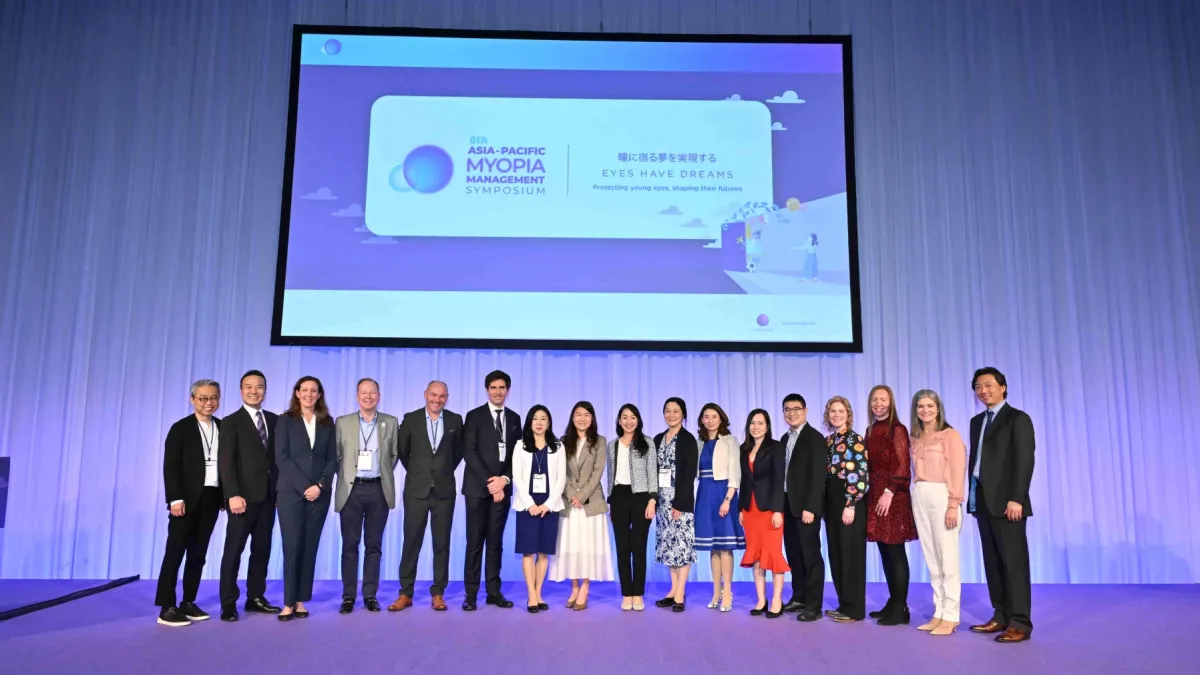
Japan may need to speed up myopia-control adoption after untreated children showed progression rates 33% faster than CooperVision Inc.’s global study population, experts said at the Asia Pacific Myopia Management Symposium in Tokyo on 10 May.
Speaking at the event, Paul Chamberlain, Senior Director of Research Programs at CooperVision, said the company’s MiSight® 1-day contact lens for myopia control became available nationwide in February, six years after it first sought approval.
“East Asia has the highest rates of short-sightedness in the world, and in children there, it tends to progress about 50% faster than in Western countries,” he said.
In an August 2025 report, CooperVision said Japan has one of the world’s highest rates of myopia, or near-sightedness, with up to 77% of children aged six to 11 and 95% of those aged 12 to 14 affected.
The report added that nearly half the world’s population is expected to have myopia by 2050, with the wider Asia-Pacific region considered particularly vulnerable.
Although progression was faster overall, MiSight reduced myopia-related eye growth by about 47% in Japanese children, compared with 49% in the wider population, Chamberlain added.
He said the group was now focused on securing approvals in other markets and developing products for a wider range of prescriptions, including children with astigmatism, whilst reducing visual side effects.
Meanwhile, Niall Crosby, Senior Consultant and Director of Vitreoretinal Surgery, Medical Retina and Uveitis in the International Eye Cataract Retina Centre at Mount Elizabeth Medical Centre and Farrer Park Medical Centre, Singapore, said myopia is increasingly becoming a long-term public health and economic issue.
Crosby said Japan could see myopic maculopathy, or damage to the retina, doubling by 2050 due to high myopia prevalence and a rapidly ageing population.
“So even a modest slowing of childhood myopia could translate into the prevention of very large numbers of future retinal cases,” he added.
The symposium also highlighted concerns that Japan may lag behind regional peers in adopting myopia-control strategies.
Sagamihara Eye Clinic Director Kiichiro Okano said Japan has historically been slower to adopt interventions because of limited long-term safety data and physician caution around children wearing contact lenses.
By contrast, Singapore — where he practised before opening his clinic in Kanagawa in 2023 — has developed a national myopia-management framework involving schools, healthcare institutions, and government-led awareness campaigns.
Singapore also now widely offers low-dose atropine, orthokeratology, multifocal soft contact lenses, and emerging red-light therapies, said Wei Yan Ng, Medical Director, Senior Consultant at Aurora Eye Centre.
“Usage of contact lenses for myopia control was essentially 0% in 2011 due to limited modalities,” Ng said. “By 2016, it was only 3.9%, and by 2024, it had increased to nearly 30%.”
About 64% of children using contact lenses for myopia control at the centre are now using MiSight, said Foo Li Lian, Consultant Ophthalmologist and Clinical Director of the Myopia Service at Singapore National Eye Center.
The product has been commercially available in Singapore since September 2018.
Foo added that the Singapore Ministry of Health has issued screen-time guidance for children, whilst schools have begun restricting mobile-device use during breaks.








 Read Here
 Advertise
 Sign Up