Shape the future of sustainable medicine with NUS’ programmes
As climate pressures grow, it is crucial to equip professionals with data, carbon literacy, and practical skills to reduce healthcare’s footprint.
Sustainability has become a central factor in how hospitals, governments, and health organisations deliver care amidst the intensifying climate pressures and the rising demand tackled by healthcare systems.
But more than that, this shift, as pointed out by clinician-researcher Dr Michelle Tan Bee Hua in an interview with Healthcare Asia, presented opportunities for future-ready graduates with the new roles it created.
The healthcare's future
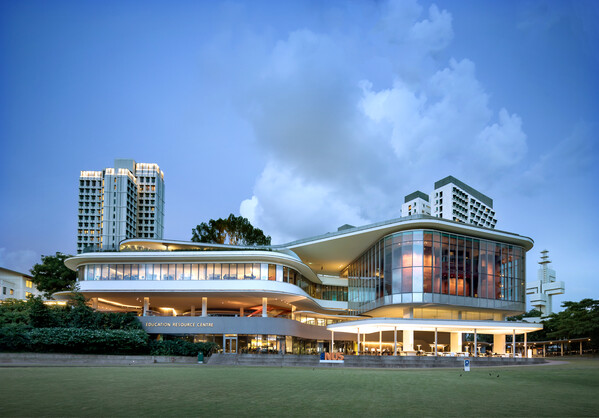
Dr Michelle, whose career attests to how sustainability is reshaping healthcare, underscored that health and climate are deeply interconnected. Hence, healthcare workers can no longer ignore the sector’s contribution to climate change.
“My journey into sustainability started almost unexpectedly, through a project to revamp our operating theatre’s recycling programme. That experience opened my eyes to the amount of waste embedded in routine patient care and led me to work on several hospital sustainability initiatives over the years,” she said.
As an Anaesthetist at Singapore’s Changi General Hospital, Dr Michelle also noted how she became aware of the global warming potential of the inhalational anaesthetic gases she used every day, which prompted her to learn more about carbon analytics and climate science.
These experiences, she said, showed how the potential of sustainability research in healthcare has yet to be fully explored. In an effort to contribute to the field more meaningfully, Dr Michelle decided to pursue a PhD in sustainable healthcare at National University of Singapore (NUS), where she was able to learn from faculty through attending Master’s level modules whilst working on an individual thesis.
“Healthcare is responsible for about 4 to 5% of greenhouse gas emissions, and in Singapore, the footprint is around 7%. These emissions cause consequences beyond just environmental, with adverse health outcomes due to heat-related illnesses, respiratory conditions, diseases spread by insects such as dengue and even disruptions to healthcare delivery during extreme weather events,” she underscored. “Hence, it is clear that the sector is both affected by climate change and a contributor to it.”
Whilst sustainability efforts in Singapore have traditionally focused on infrastructure and energy optimisation by hospital operations teams, this is not enough. There is an urgency behind sustainable healthcare grounded in hard realities.
The new skills healthcare needs
As sustainability becomes embedded in healthcare, Dr Michelle highlighted the new skillsets that are rising in importance, saying that whilst the core of healthcare will always be the delivery of high-quality medical care, the context is changing.
“Just as financial costs have become a routine part of clinical decision-making, carbon costs will increasingly need to be considered as well,” she said, further stating that data fluency is a requirement.
“Future healthcare professionals must be comfortable working with data, with enough literacy to understand, interpret, and critically evaluate the information that shapes clinical and operational decisions,” she added.
Fortunately, this, along with the foundational understanding of environmental metrics to align patient care with planetary responsibility, is attainable through the NUS programmes like the Master of Science in Sustainable Healthcare. Its modules are distinctive because they teach sustainability concepts directly within the healthcare context.

“The module on Life Cycle Assessment (LCA) was particularly valuable because it was specifically tailored to healthcare,” Dr Michelle stated. “It was taught by experienced practitioners whose research focuses on healthcare LCAs, and the teaching centred on real healthcare products and services rather than abstract methodology.”
Instead of theoretical exercises, the modules discuss real-world complexities, including reprocessing through sterilisation, the trade-offs between single-use and reusable devices and how these factors influence system boundaries and calculations.
Additionally, these programmes are also accessible to those without prior experience in healthcare because sustainable healthcare is not limited to clinicians. As Dr Michelle pointed out, hospitals and healthcare systems are not run by medical staff alone, as they also rely on professionals from engineering, public health, business, and many other fields.
Looking ahead, Dr Michelle hopes to see sustainable healthcare as an extension of medicine’s core values, elevating standards by ensuring that the care provided does not inadvertently harm the planet or the communities in it.
Advising aspiring professionals, she added, “Stay curious and start small. You do not need to be an expert to contribute.”
To know more about NUS’ programme, visit https://medicine.nus.edu.sg/cosm/education/msc/.







 Read Here
 Advertise
 Sign Up