NUH leverages AI to ease healthcare strain
Digital tools help staff handle ageing demand.
National University Hospital (NUH) is deploying artificial intelligence and digital tools to reduce administrative burden and help clinicians focus on patient care as Singapore prepares for a rapidly ageing population and tighter healthcare workforce.
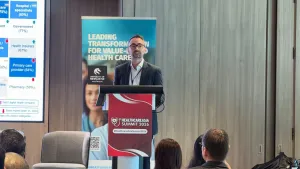
By 2030, nearly one in four Singapore residents will be aged 65 or older, increasing demand for healthcare services and complex treatment. Prof. Aymeric Lim, Chief Executive Officer of NUH said the hospital is redesigning roles and workflows so healthcare workers can concentrate on specialised responsibilities.
“Singapore is becoming a super age society, and by 2030, one in four of our citizens will be 65 or older. There will be multiple comorbidities, and we'll need about 6000 healthcare hires every year,” Lim said.
To address the challenge, NUH is focusing on enabling staff to work at the “top of their license,” ensuring professionals perform tasks aligned with their training. “Every professional should be spending their time on the work that only they are trained to do,” Lim said.
The hospital is introducing role redesign and expanding responsibilities across teams. “We have set ourselves a target of 100 nurse-led initiatives by 2028 that means new things that nurses are going to do.” Lim said more than 50 initiatives have already been implemented, including nurses performing specialised procedures in some clinics.
Digital platforms and AI systems are supporting these changes by reducing operational friction and improving information flow. Lim said technology must be paired with organisational readiness. “It's no point deploying digital tools if the organisation is not ready.”
At NUH, digital systems provide clinicians with shared data and automated support tools. “Doctors used AI enabled summarisation of their records,” Lim said, whilst hospital-level dashboards help reduce cognitive load by providing real-time operational insights.
AI applications are also being deployed in areas where documentation and workflow bottlenecks occur. “We have the ED summariser, which generates medical records from clinicians notes. That's a huge documentation bottleneck, which we have addressed,” Lim said.
Beyond technology deployment, NUH is pushing cultural change to support a digital-first hospital strategy. Lim said leaders were required to adopt digital tools themselves to drive adoption across teams. “They have trained in the past two years, 40% of our staff, all 9000 staff in AI, and now innovation is embedded.”

















 Read Here
 Advertise
 Sign Up








Commentary
AI drug discovery, GLP-1, and the next wave of Hong Kong biotech listings
Beyond symptom control: Redefining IMID care in Malaysia
How decentralised clinical trials can unlock Asia's research potential