Tissue valve uptake hinges on data and diagnosis
Durability evidence is shifting younger patient use whilst awareness remains Australia’s main adoption barrier.
Longer-term tissue valve data is shifting how surgeons assess younger heart valve patients, with durability findings and future valve-in-valve options broadening treatment choices.
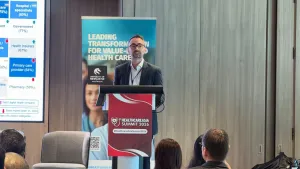
Speaking at the RESILIA Summit last 23 June, Asst. Prof. Andrew Newcomb, Cardiothoracic Surgeon and Director of the Cardiac Surgery Unit at The Royal Melbourne Hospital, said 10-year data from the COMMENCE trial has improved understanding of how long tissue valves can last.
“The data from the COMMENCE 10-year trial has really improved our understanding of how well these valves will last,” Newcomb said. “It has decreased the age of implant that we'll think about for these patients.”
He said the main barrier to wider adoption in Australia is patient awareness rather than cost. Australia’s government pays for or subsidises these valves fully, making diagnosis the larger challenge.
“The biggest barrier to widening the adoption of these valves is probably patient understanding more than anything,” Newcomb said.
Patients first need to seek medical advice and identify that they have heart valve disease before treatment options can be considered.
Newcomb said treatment decisions in Australia are still driven largely by international studies, although the country has robust local data collection across surgical heart valve procedures and TAVI, or percutaneous heart valve treatment.
Surgeons are also weighing future valve-in-valve options when considering tissue valves for younger patients. Newcomb said newer surgical valves include design features that allow broader use of valve-in-valve procedures later.
“I think valve-in-valve is a very real opportunity for us to be introducing these tissue valves into younger and younger patients,” he said.
For Australian clinicians, the next test is whether stronger durability evidence, wider diagnosis and future valve-in-valve options can support broader tissue valve use in younger patient groups.





 Read Here
 Advertise
 Sign Up






Commentary
Beyond symptom control: Redefining IMID care in Malaysia
How decentralised clinical trials can unlock Asia's research potential