
SGH saves 8,700 bed days by trading 'bed-filling' for capitation
Under the capitation model, SGH is paid upfront to keep 1.8 million citizens healthy.
Singapore faces a "perfect storm" of a shrinking workforce and a rapidly ageing population, yet its healthcare system remains stagnant—stubbornly anchored to a 20-year-old model of acute, hospital-based care.
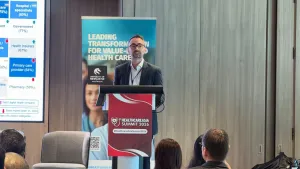
"The question that we need to ask is how we as a health system is truly going to cope with these changes," Hiang Khoon Tan, CEO of Singapore General Hospital (SGH), said during the Healthcare Asia Summit held in Singapore on 25 March.
For years, the industry has relied on the old adage that "if you build a hospital, the beds will be full," but Tan warns that in the Singaporean context, "no matter how many beds you build... your pressure will come back."
To break this cycle, SGH is shifting its entire operational and financial philosophy. Central to this is a move away from the traditional fee-for-service model toward capitation.
As a surgeon by profession, Tan noted the personal impact of this structural change within the Singapore Ministry of Health’s new framework: "In the past, where I used to do 100 surgeries, I claimed 100 surgeries' worth of money from the government. Now the money is given upfront to me, and I manage it the best way possible."
This financial alignment is the catalyst for SGH’s "Hospital Without Walls" strategy. Each health cluster in Singapore now manages between 1.4 to 1.8 million citizens, and with funding provided upfront, the hospital’s primary KPI shifts from filling beds to sustaining health.
"The behaviour of healthcare system, the behavior of people, do follow how we reward them and how we pay for them," Tan said.
Under this new mandate, SGH is now incentivised to invest in preventing patients from getting sick in the first place.
The economic impact of this shift is most visible in cost avoidance through micro-efficiencies.
Tan highlighted that at SGH, even a marginal reduction in the average length of stay by just 0.1 day translates into significant institutional cost avoidance.
To achieve this, SGH is deploying unconventional social interventions, such as the "TriGen" initiative, where Singaporean college students engage with geriatric patients. A pilot of this programme reduced the average length of stay by 2.87 days, effectively unlocking millions in value through social interaction rather than medical procedures.
Technology is being used as a precision tool to scale this preventive care across the island. SGH developed "Pensive AI," a self-administered dementia detection tool that reduces screening time from 55 minutes to just 10 minutes.
"Time saving from 55 to 10 minutes from trained professional to self-administered... imagine the impact that you will have on the ability to scale this across the population," Tan said, noting a planned national rollout in Singapore for 2026.
Similarly, a "Hospital-at-Home" pilot saved over 8,700 bed days, allowing SGH to admit 1,300 additional acute patients without expanding its physical footprint.
Ultimately, SGH’s transition proves that technology and data are only effective when aligned with national policy.
"You can have all the tools... but if you do not align with policy, it is very hard to invest in preventative care," Tan said.















 Read Here
 Advertise
 Sign Up