The worker we keep missing
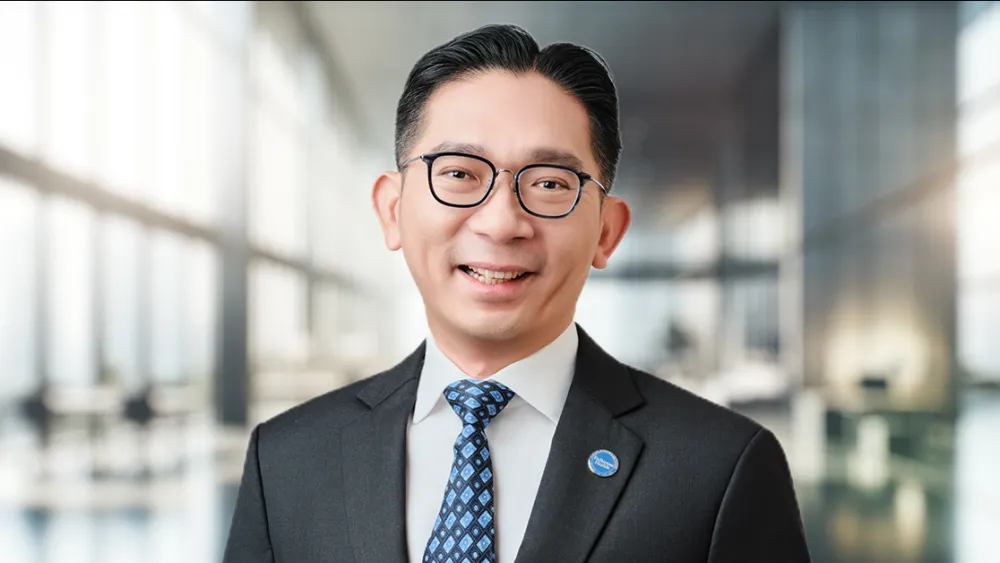
By Dr. Marziah ZaharThe issue is whether we understand how health and work interact.
Ask a doctor about a patient's health and the conversation will probably begin with symptoms, diagnosis, and treatment. Ask an occupational safety and health professional about the same person and the conversation may begin with hazards, exposure, and controls. An employer may look at the situation through absenteeism, productivity, or retention.
Three perspectives, yet only one person sits at the centre of them all. Somehow, that person can disappear between the systems designed to care for, employ, and protect them.
This matters as Asia's workforce changes. People are working longer, women are participating across a wider range of occupations, chronic health conditions are increasingly managed alongside employment, and organisations are under growing pressure to retain experienced workers. The workplace has changed, but our idea of the worker has not always changed with it.
Occupational safety and health have become highly skilled at identifying hazards and controlling risks. Healthcare has become increasingly sophisticated at diagnosing and managing health conditions, whilst human resources has developed an expanding vocabulary around wellbeing, engagement, and workforce sustainability. These advances are valuable, but they have also created a curious separation. We have become very good at managing different parts of a person's working life without always connecting them.
The worker is rarely as simple as a job title or an exposure profile. A person brings health, age, biology, sleep, medication, family responsibilities, and life-stage changes into the workplace every day. These factors do not automatically make someone vulnerable. They simply shape how that person experiences work, and sometimes how work interacts with their health.
Women's health offers a useful illustration. Consider menopause. It is increasingly recognised as an important healthcare and workforce issue, but it is still often treated either as a medical matter or as an employee wellbeing concern.
What happens when it meets the workplace? A woman experiencing disrupted sleep may also be working shifts. Joint pain may interact with manual or repetitive work. Difficulties with concentration may matter when sustained attention or safety-critical decisions are required, whilst heat discomfort may become particularly challenging in physically demanding environments.
The issue is not whether menopause makes someone less capable of working. The issue is whether we understand how health and work interact.
There are already signs of what this could look like. In Japan, Honda has brought occupational health professionals closer to the actual work environment. At one manufacturing site, a health professional spent a year working alongside factory employees to better understand their conditions. Honda's approach to women's health also connects occupational health, human resources, and workplace-level initiatives rather than treating women's health simply as a standalone awareness campaign.
Singapore is moving in a related direction. Its 2026 Alliance for Action on Safety and Health for Employment Longevity brings together employers, workers, unions, government agencies, and healthcare institutions, with workplace adaptation and job redesign identified as part of the response to a more diverse workforce with varied physical and health needs.
These are not finished models, nor should they be presented as universal solutions. But they point towards something important. The future of workplace health may not be another programme added to an organisation. It may be the ability to connect programmes that already exist.
A clinical approach may focus on managing symptoms, human resources may consider flexibility or absence, and an Occupational Safety and Health (OSH) approach may consider fatigue, ergonomics, thermal conditions, or the demands of the task. Each response can be appropriate, but if they remain separate, the worker is still left to connect the dots.
Malaysia recognised the importance of gender in occupational safety and health more than two decades ago. Its Department of Occupational Safety and Health issued guidelines on gender issues in OSH in 2003, acknowledging that women and men may experience occupational risks differently.
More recent Malaysian research makes the issue harder to ignore. A 2025 study of 1,825 working Malaysian women aged 40 to 60 found joint pain, sleep disturbance, brain fog, and mood changes amongst commonly reported menopausal symptoms. Another Malaysian study has highlighted gaps in workplace recognition, support, and organisational responses to menopause. The evidence is emerging. The challenge is turning it into how work is actually organised.
For healthcare organisations, this question is particularly relevant. Hospitals understand that health is shaped by more than clinical treatment, yet healthcare workers themselves operate within environments characterised by shift work, fatigue, physical demands, emotional pressures and changing life stages.
If healthcare organisations understand the importance of individualised care for patients, perhaps they should apply the same curiosity to the people providing that care.
What kind of work does this person return to? What does the workplace demand of them? Could the work environment be amplifying a health problem? Could a change in work design prevent a larger consequence later?
These are not purely medical questions, nor are they purely HR questions. They belong in the space between healthcare and occupational health. For Asia, that space is becoming increasingly important. Longer working lives and demographic change mean organisations cannot simply assume experienced workers can be replaced when health begins to affect their ability to work. Retaining people will increasingly depend on understanding how work can adapt to the workforce rather than expecting the workforce to adapt indefinitely to the work.
This does not mean lowering standards or creating a separate workplace for every life stage. It means making occupational health more precise. Perhaps the next generation of risk assessment should ask not only, “What is the hazard?” but also, “How does this hazard meet the person doing the work?”
That is a subtle change, but it could have profound consequences.
The patient and the worker are not two different people. The employee and the worker are not two different people either. They are the same person moving through different systems that were never designed to operate as one.
Healthcare sees the patient, human resources see the employee. and OSH sees the workplace.
But the worker lives where all three meet. Perhaps that is the person we need to see more clearly.

 Read Here
 Advertise
 Sign Up